

 English
 中文简体
中文简体

Content
- 1 How Waterproof Fabric Actually Works: Three Distinct Technologies
- 2 Protection Against Moisture Damage: The Primary Functional Advantage
- 3 Extended Product Durability and Reduced Lifecycle Cost
- 4 Breathability: The Advantage That Separates Modern Waterproof Fabrics
- 5 Advantages Across Specific Application Categories
- 6 Stain and Contamination Resistance as a Functional Benefit
- 7 Noise Reduction and Wind Resistance: Less Obvious Advantages
- 8 Care, Maintenance, and Restoring Waterproof Performance
- 9 Waterproof Fabric and Sustainability: Addressing the Trade-Offs
Waterproof fabric has moved well beyond rain jackets and tarpaulins. Today it is engineered into medical devices, architectural membranes, military equipment, high-performance sportswear, and everyday consumer products where moisture control is a functional requirement rather than an optional feature. Understanding the genuine advantages of waterproof fabric — and how those advantages translate into real-world performance gains — helps designers, manufacturers, and buyers make more informed material choices across a wide range of applications.
How Waterproof Fabric Actually Works: Three Distinct Technologies
Before evaluating advantages, it is worth clarifying that "waterproof fabric" is not a single material — it describes several distinct technologies that achieve water resistance through different mechanisms, each with its own performance profile and practical trade-offs.
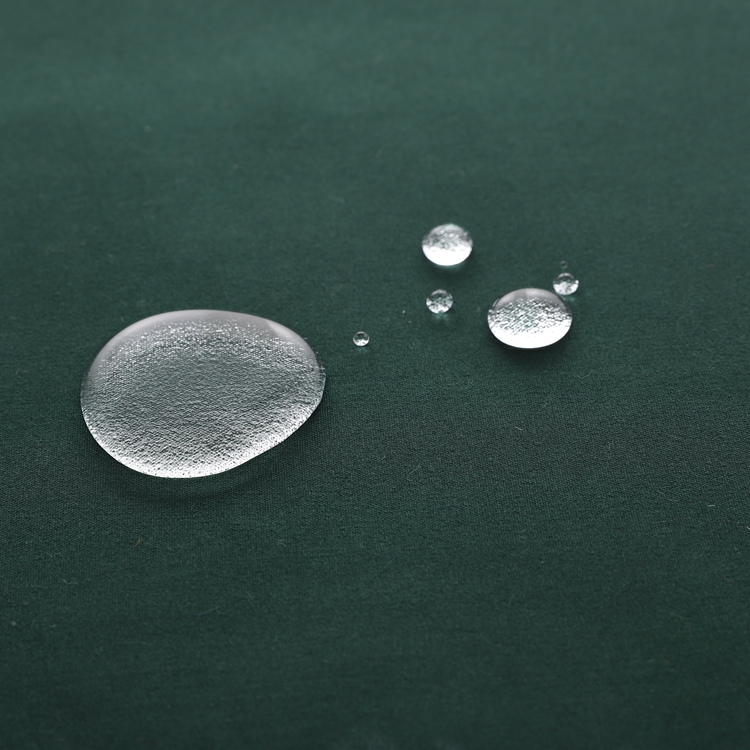
- Durable Water Repellent (DWR) treatments: A chemical finish applied to the outer surface of a fabric that causes water to bead and roll off rather than being absorbed. DWR-treated fabrics are not truly waterproof — if the treatment wears off or becomes saturated, water will eventually penetrate. DWR is most effective as a first line of defense in combination with a membrane layer.
- Laminated membrane fabrics: A microporous or hydrophilic membrane — most commonly expanded polytetrafluoroethylene (ePTFE) such as Gore-Tex, or polyurethane (PU) — is bonded to the inner face of an outer fabric. The membrane blocks liquid water droplets (which are too large to pass through the micropores) while allowing water vapor molecules from perspiration to migrate outward. This is the technology that enables waterproof-breathable performance.
- Coated fabrics: A continuous film of PU, PVC, silicone, or rubber is applied to the fabric surface or back, filling all pores completely. Coated fabrics provide the highest level of waterproofing and are used in applications requiring full impermeability — such as protective covers, tarpaulins, industrial workwear, and medical barrier textiles — but they do not allow moisture vapor transmission.
Waterproofness is measured in millimeters of hydrostatic head — the height of a water column a fabric can support before water passes through. Fabrics rated above 10,000 mm are considered suitable for high-intensity rain; those above 20,000 mm are used in severe weather and technical mountaineering applications.
Protection Against Moisture Damage: The Primary Functional Advantage
The most direct advantage of waterproof fabric is its ability to prevent moisture from penetrating to whatever lies beneath it — whether that is the human body, insulation layers, electronic equipment, or structural materials. This protection operates across multiple dimensions that extend well beyond keeping the wearer dry in rain.
Thermal Performance Preservation
Wet insulation loses most of its thermal resistance. Down insulation, for example, loses approximately 90% of its loft and insulating value when wet, becoming a cold, dense layer that accelerates heat loss rather than retaining it. Synthetic insulation performs better when wet but still loses significant thermal effectiveness. A waterproof outer shell that prevents rain and wet snow from reaching the insulation layer preserves the full thermal performance of the system, which is critical in cold environments where hypothermia is a genuine risk. This is why waterproof fabric in cold-weather gear is a safety feature, not merely a comfort feature.
Protection of Non-Textile Components
Waterproof fabric is widely used as an enclosure or barrier material for equipment, electronics, and structural assemblies. Bags for laptops, cameras, and medical devices use waterproof fabric to prevent water ingress that would cause component failure. Waterproof covers for outdoor furniture, vehicles, and construction materials prevent moisture-related degradation — wood swelling, metal corrosion, foam deterioration — that would otherwise shorten the service life of expensive assets. In these applications, the cost of the waterproof fabric is trivial relative to the replacement cost of the items it protects.
Extended Product Durability and Reduced Lifecycle Cost
Waterproof fabrics consistently outlast equivalent non-waterproof fabrics in applications where moisture exposure is regular. The mechanisms behind this durability advantage are specific and worth understanding in detail.
Water is one of the primary drivers of textile degradation. In natural fibers, repeated wetting and drying cycles cause fiber swelling and contraction that mechanically weakens the yarn structure over time. In synthetic fabrics, water absorption promotes hydrolytic degradation of certain polymer chains, particularly in polyurethane and polyamide structures. Waterproof coatings and membranes that prevent water from penetrating the fabric cross-section dramatically slow both of these degradation pathways.
Waterproof fabrics also resist biological degradation more effectively. Mold, mildew, and bacterial growth require moisture to establish and spread. A fabric that stays dry at its core — because moisture is shed from the surface rather than absorbed — does not provide the wet substrate that mold requires. This is particularly relevant for products stored in damp environments, outdoor equipment left in humid conditions, or medical textiles where microbial contamination is a hygiene concern.
In lifecycle cost terms, a waterproof fabric product that maintains its functional performance and structural integrity for five years rather than two delivers roughly 60% lower annual cost of ownership, even when the upfront material cost is 30 to 50% higher than a non-waterproof equivalent. This calculation has made waterproof fabric the default specification in industrial workwear, military procurement, and professional outdoor equipment, where lifecycle cost is evaluated rigorously.
Breathability: The Advantage That Separates Modern Waterproof Fabrics
Early waterproof fabrics — oilskin, rubberized canvas, PVC coatings — were completely impermeable to both liquid water and water vapor. Wearing them during physical activity produced severe internal condensation as perspiration had no pathway to escape. The result was that the wearer got wet from the inside, defeating the purpose of waterproof protection in high-exertion scenarios. The development of waterproof-breathable membranes addressed this limitation and created one of the most significant performance advantages in modern technical textile engineering.
How Breathability Works in Membrane Fabrics
In ePTFE microporous membranes, approximately 9 billion microscopic pores per square inch each measure around 0.2 microns in diameter. Liquid water droplets are typically 100 microns in diameter — 500 times larger than the pores — and cannot pass through. Water vapor molecules from perspiration are approximately 0.0004 microns in diameter and pass through easily, driven by the vapor pressure differential between the warm, humid microclimate inside the garment and the cooler, drier air outside. This size differential creates a one-way selective barrier that is the foundation of waterproof-breathable performance.
Breathability Ratings and Practical Performance
Moisture vapor transmission rate (MVTR) is the standard measure of breathability, expressed in grams of water vapor that pass through one square meter of fabric in 24 hours. Consumer outdoor garments typically use fabrics with MVTR ratings between 10,000 and 20,000 g/m²/24h. High-performance mountaineering and endurance sport fabrics reach 30,000 to 50,000 g/m²/24h. Understanding that breathability decreases as external conditions become colder and wetter — because the vapor pressure differential narrows — helps explain why even premium waterproof-breathable fabrics may feel clammy in very cold, wet conditions during high-intensity activity. Managing layering and ventilation openings remains important regardless of the membrane's rated breathability.
Advantages Across Specific Application Categories
The advantages of waterproof fabric manifest differently depending on the application context. The following comparison illustrates how the core properties translate into specific benefits across key categories:
| Application | Primary Advantage | Secondary Advantage |
|---|---|---|
| Outdoor apparel | Thermal system integrity in rain and snow | Breathability during physical activity |
| Industrial workwear | Worker safety in wet environments | Reduced garment replacement frequency |
| Medical textiles | Barrier protection against fluid contamination | Ease of decontamination and reuse |
| Outdoor furniture covers | Prevention of substrate mold and corrosion | UV-resistant coatings extend fabric life |
| Bags and luggage | Contents protection in rain and wet storage | Abrasion resistance of coated outer shell |
| Construction and tarpaulins | Material and structure protection during build | Reusable across multiple project cycles |
Stain and Contamination Resistance as a Functional Benefit
Waterproof fabric coatings and DWR treatments that cause water to bead and roll off produce essentially the same effect on many water-based stains and liquid contaminants. Coffee, juice, mud slurry, and many food spills behave similarly to water on a well-treated waterproof surface — they remain on the surface rather than being absorbed into the fiber structure, making them significantly easier to remove before they set into the fabric.
This property is exploited deliberately in hospitality textiles, healthcare upholstery, children's products, and workwear. Restaurant tablecloths, healthcare chair upholstery, and childcare facility floor mats are frequently made from waterproof or water-resistant fabrics specifically because surface contamination can be wiped away with a damp cloth rather than requiring full laundering. The maintenance efficiency gains in high-turnover institutional environments are substantial — reducing laundering frequency from daily to weekly for a fabric that maintains hygiene standards between wipes translates directly into lower operating costs and fabric wear.
In industrial and laboratory applications, waterproof fabric provides chemical resistance benefits beyond simple water repellency. PVC-coated fabrics and certain fluoropolymer-coated textiles resist penetration by dilute acids, alkalis, and organic solvents, making them appropriate for protective aprons, splash guards, and chemical handling equipment where worker protection from liquid chemical exposure is required.
Noise Reduction and Wind Resistance: Less Obvious Advantages
Waterproof membrane and coated fabrics are inherently windproof because the same layer that blocks liquid water also blocks wind. Wind chill dramatically increases the rate of body heat loss — a 15 mph wind at 0°C feels equivalent to approximately -10°C in terms of heat loss rate. A windproof waterproof outer layer eliminates convective heat loss from wind penetration through the fabric, which is a meaningful thermal advantage in exposed environments even when conditions are dry.
The dense surface of coated and laminated waterproof fabrics also provides a degree of acoustic damping compared to open-weave fabrics. This property is used in automotive textiles, acoustic panels, and certain industrial enclosure applications where noise transmission through fabric panels needs to be minimized. While waterproof fabric is not a primary acoustic material in the way that specialized sound absorption products are, its contribution to noise reduction in combined applications is a genuine secondary benefit rather than a coincidental one.
Care, Maintenance, and Restoring Waterproof Performance
One advantage of modern waterproof fabrics that is frequently underappreciated is their relatively low maintenance requirement — and the practical restorability of their performance. Understanding how to care for waterproof fabric correctly ensures that the material continues to deliver its designed advantages throughout its service life.
- Washing restores DWR performance: Contrary to a common misconception, the primary cause of DWR failure is not the treatment wearing off — it is contamination of the fiber tips by body oils, sunscreen, dirt, and detergent residue that prevents the DWR from causing water to bead. Washing the fabric with a technical cleaner removes these contaminants and often restores water beading performance without any re-treatment.
- Heat reactivates DWR: DWR molecules are designed to orient themselves perpendicular to the fiber surface, but contamination and compression cause them to lie flat. Tumble drying on low heat or gentle ironing through a cloth after washing reactivates the DWR by allowing the molecules to realign. This simple step is often sufficient to restore water-beading performance without the cost of reproofing spray.
- Reproofing extends performance life: When washing and heat treatment no longer restore beading performance, wash-in or spray-on DWR reproofing products can restore the treatment for an additional extended period of use. This repairability means that waterproof fabric products do not have a fixed point at which waterproof performance is lost — it can be maintained and restored with appropriate care, supporting longer overall product life.
- Membrane integrity is long-lasting: The ePTFE or PU membrane layer in laminated waterproof fabrics does not wear out under normal use conditions. Delamination — separation of the membrane from the face fabric — is the primary membrane failure mode and is typically caused by contamination with body oils, improper washing with fabric softeners, or physical abrasion of seam tape. Following care label instructions that prohibit fabric softener use and recommend technical wash products protects membrane integrity for many years of regular use.
Waterproof Fabric and Sustainability: Addressing the Trade-Offs
The advantages of waterproof fabric come with sustainability considerations that are worth acknowledging candidly. Traditional DWR treatments based on perfluorooctanoic acid (PFOA) and long-chain perfluorocarbons (PFCs) are persistent environmental contaminants, and their use in consumer textiles has been substantially reduced through voluntary industry commitments and regulatory pressure. The current generation of DWR treatments uses short-chain fluorine compounds or non-fluorinated alternatives based on wax, silicone, or dendrimer chemistry. These newer formulations have lower environmental persistence but require more frequent re-application in high-use scenarios, which is a real performance trade-off that buyers of technical waterproof fabrics should factor into their expectations.
Against this environmental consideration, the durability advantage of waterproof fabric presents a countervailing sustainability benefit. Products that last longer, require less frequent replacement, and maintain their functionality through extended service — which waterproof construction directly enables — have a lower total environmental impact per year of use than non-waterproof products replaced more frequently. Specifying waterproof fabric for applications where moisture exposure is a genuine durability threat is therefore both a performance and a sustainability decision when evaluated on a full product lifecycle basis.