

 English
 中文简体
中文简体

Content
- 1 What Polyester Blank Fabric Is Made Of
- 2 Main Construction Types and Their Practical Differences
- 3 Key Specifications to Evaluate When Sourcing
- 4 Polyester Blank Fabric for Sublimation Printing
- 5 Polyester Blends vs. 100% Polyester Blank Fabric
- 6 Common Finishing Treatments Applied to Polyester Blank Fabric
- 7 Practical Buying Considerations for Polyester Blank Fabric
Polyester blank fabric sits at the foundation of an enormous range of finished textile products — from performance sportswear and sublimation-printed apparel to home furnishings, workwear, and promotional merchandise. The term "blank" in this context refers to undecorated, unfinished fabric supplied in its base form, ready for cutting, sewing, printing, dyeing, or further processing by manufacturers and brands. Unlike garment blanks — which are fully constructed pieces awaiting decoration — blank fabric is sold by the roll or meter and requires subsequent fabrication steps before reaching its end form. Understanding what polyester blank fabric actually is, how different constructions and weights compare, and what quality indicators to evaluate when sourcing it is essential knowledge for product developers, textile buyers, and manufacturing operations that depend on consistent, reliable material supply.
What Polyester Blank Fabric Is Made Of
Polyester fabric is manufactured from polyethylene terephthalate (PET) polymer — the same base material used in beverage bottles, packaging film, and industrial fiber applications — spun into continuous filament or staple fiber yarns and then woven or knitted into fabric structures. The polymer is produced through condensation polymerization of ethylene glycol and terephthalic acid, creating long-chain molecules with high tensile strength, resistance to stretching, and inherent hydrophobicity. These molecular properties translate directly into the fabric's most commercially valuable characteristics: dimensional stability, wrinkle resistance, fast drying, and durability through repeated washing cycles.
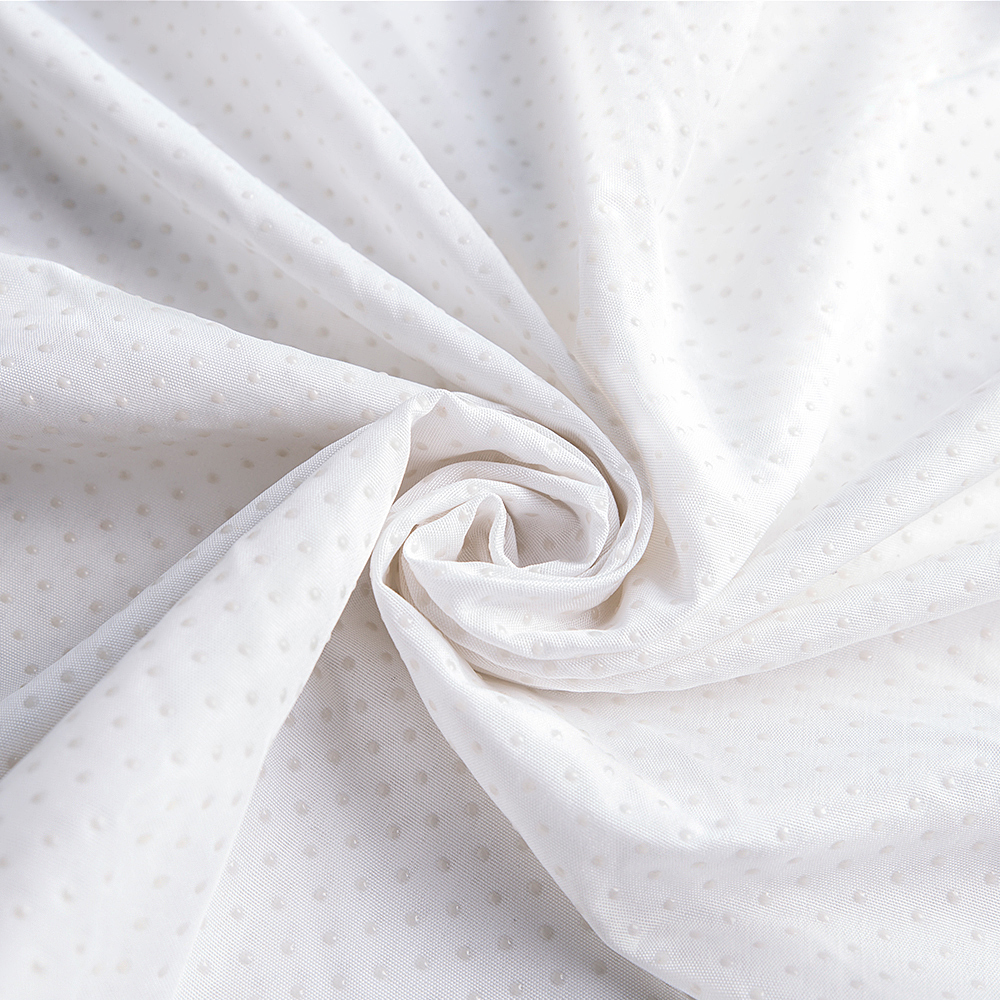
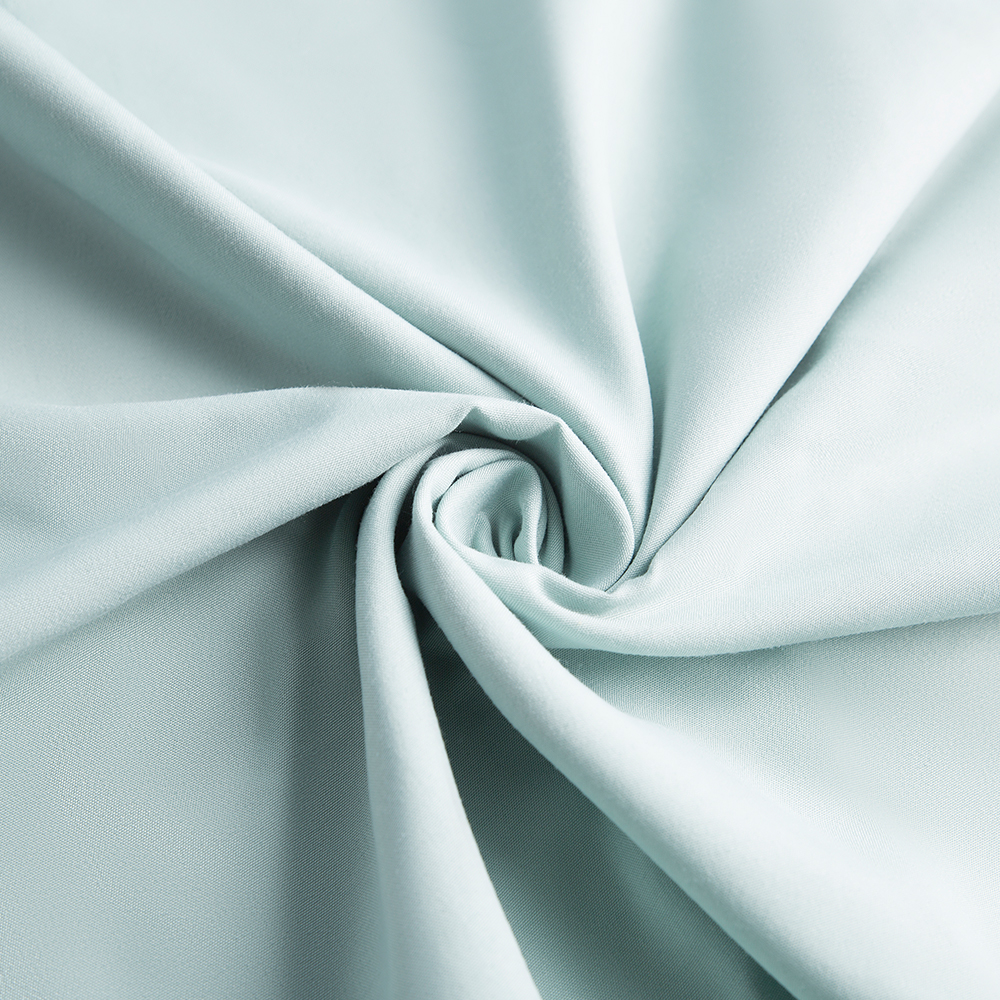
Blank polyester fabric is supplied without dye (in its natural off-white or gray raw state), or as a pre-dyed solid color base — both are considered "blank" relative to decorative printing or embroidery that has not yet been applied. The raw state is preferred for sublimation printing applications because the dye sublimation process requires the polyester fiber to be undyed — the sublimation inks bond directly with the polyester polymer chains under heat and pressure, and a pre-dyed base would alter the color outcome of the print. For cut-and-sew apparel or home textile production where the base color is the final color, pre-dyed blank polyester fabric eliminates the dyeing step from the buyer's workflow.
Main Construction Types and Their Practical Differences
Polyester blank fabric is available in both woven and knitted constructions, and within each category there are multiple structural variants with distinct performance profiles. Choosing between them is not merely an aesthetic decision — construction type fundamentally determines stretch behavior, breathability, drape, printability, and suitability for specific end-use applications.
Woven Polyester Blank Fabric
Woven polyester fabric is produced on a loom by interlacing warp yarns (running lengthwise) and weft yarns (running crosswise) in a defined pattern. The most common woven constructions used as blank polyester fabric include plain weave (balanced interlacing for stability and smooth surface), twill weave (diagonal rib pattern for improved drape and softness), and satin weave (long float yarns creating a smooth, lustrous face). Plain weave polyester is the dominant choice for sublimation printing blanks, workwear fabric, and bags due to its flat, even surface that accepts ink or coating uniformly. Twill polyester — including the widely used 4/1 and 2/1 twill constructions — is preferred for apparel applications where softer hand feel and better drape are priorities. Woven polyester blank fabric is essentially non-stretch in either dimension unless elastane (spandex) yarns are incorporated into the weft, making it dimensionally predictable during cutting and sewing.
Knitted Polyester Blank Fabric
Knitted polyester blank fabric is produced by interlocking loops of yarn rather than crossing them at right angles, creating a fabric structure with inherent stretch and recovery in one or both directions. Single jersey polyester — the lightest common knit construction — produces a fabric with stretch in the horizontal (course) direction and is widely used for T-shirts, sportswear, and lightweight performance tops. Interlock polyester provides a double-faced structure with stretch in both directions and a smoother, more stable surface than single jersey, making it preferred for polo shirts, children's clothing, and performance layering pieces. Polyester mesh and bird's-eye knit constructions incorporate deliberate open pores in the fabric structure, enhancing air permeability for athletic and workwear applications. Knitted polyester blank fabrics are the dominant choice for performance apparel and sublimation-printed sportswear due to their comfortable stretch, moisture-wicking potential, and ability to accept sublimation inks uniformly across the knit surface.
Key Specifications to Evaluate When Sourcing
Polyester blank fabric is a commodity category with significant variation in quality, performance, and suitability for specific applications between superficially similar products. Evaluating suppliers and specific fabric options against a defined set of technical specifications prevents costly mismatches between purchased material and production requirements.
| Specification | Typical Range | Why It Matters |
| Fabric Weight (GSM) | 60 – 300+ g/m² | Determines drape, opacity, durability, and end-use suitability |
| Yarn Count / Denier | 30D – 300D (filament); 20s – 60s (spun) | Affects softness, surface smoothness, and strength |
| Thread Count / Stitch Density | Woven: 80–200 threads/inch; Knit: 28–36 CPI | Surface density, pilling resistance, print quality |
| Polyester Content | 100% or blended (e.g., 65/35 poly/cotton) | Determines sublimation suitability and fabric character |
| Width | 58" – 63" (woven); 60" – 72" (knit, open width) | Affects cutting efficiency and fabric yield per roll |
| Shrinkage Rate | < 3% (warp and weft after wash) | Dimensional stability of finished product after laundering |
| Colorfastness (if pre-dyed) | Grade 4–5 (ISO 105 scale) | Dye retention through washing and light exposure |
| Finish Type | Raw, scoured, heat-set, moisture-wicking treated | Surface preparation level for downstream processes |
GSM (grams per square meter) is the single most consulted specification in initial fabric selection because it immediately communicates the weight class and therefore the approximate application range of the fabric. Lightweight polyester blank fabrics in the 60 to 110 GSM range are suited to activewear, lining fabrics, scarves, and lightweight sublimation-printed promotional items. Mid-weight fabrics between 120 and 180 GSM cover the largest application range — including T-shirts, polos, uniforms, and sportswear — and represent the highest-volume segment of the polyester blank fabric market. Heavier constructions above 200 GSM are used for outerwear shells, bags, banners, and applications where structural rigidity and durability are priorities over lightweight comfort.
Polyester Blank Fabric for Sublimation Printing
Sublimation printing is one of the primary reasons polyester blank fabric is specified over natural fiber alternatives in the custom apparel, promotional products, and sportswear markets. The sublimation process uses heat to convert solid dye particles into gas that bonds directly with the polyester polymer chains, producing full-color, photographic-quality prints that are embedded within the fiber rather than sitting on its surface. This produces prints that will not crack, peel, or fade from the fabric surface with washing — they degrade only as the fabric itself degrades.
However, not all polyester blank fabric performs equally in sublimation applications. The following material characteristics directly affect sublimation print quality and must be verified before committing to a fabric for sublimation production runs.
- Polyester content must be 100% or as close as possible: Sublimation dyes bond only with polyester fibers, not with cotton, nylon, or natural fibers. A fabric with 65% polyester and 35% cotton will produce a faded, washed-out print compared to the same design on 100% polyester, because only the polyester portion of each fiber bundle accepts and retains the dye. For photographic-quality sublimation printing, 100% polyester is the firm specification.
- The base fabric must be white or very light in color: Sublimation inks are translucent — they add color to the fabric rather than covering it. Any base color in the fabric will combine with the sublimation ink color to produce a shifted result. White polyester blank fabric is the standard for full-color sublimation, while light pastel bases can be used for intentionally tinted or vintage-effect print aesthetics.
- Optical brighteners (OBAs) must be absent or minimal: Many white polyester blank fabrics are treated with optical brightening agents during finishing to appear whiter under UV light. These OBAs can react with sublimation inks during the heat transfer process, causing yellow or orange discoloration in the final print — particularly in light-colored print areas. Request OBA-free or low-OBA certified fabric from suppliers for critical sublimation applications.
- Surface texture affects print sharpness: A smooth, tight-weave or fine-knit polyester surface produces sharper printed edges and more accurate color reproduction than a textured or open construction, because ink gas penetrates the fibers more evenly across the smooth surface. Mesh or heavily textured polyester constructions are suitable for large-format graphics but not for fine-detail photographic sublimation work.
Polyester Blends vs. 100% Polyester Blank Fabric
Polyester blank fabric is available both as 100% polyester and in blended compositions, most commonly polyester/cotton (poly-cotton), polyester/viscose, and polyester/spandex (elastane). Each blend type modifies the base performance profile of pure polyester in ways that expand or narrow its suitability for specific applications.
- Polyester/Cotton (CVC or TC blends): Chief Value Cotton (CVC) blends with 60% or more cotton content feel softer and more breathable than 100% polyester but sacrifice some wrinkle resistance, moisture management performance, and sublimation printability. Textile/Cotton (TC) blends with 65% polyester and 35% cotton represent the middle ground — more durable and stable than CVC, more comfortable than 100% polyester for skin-contact garments, and compatible with pigment printing and discharge dyeing even if not suitable for sublimation.
- Polyester/Spandex (typically 88/12 or 90/10): The addition of 8 to 12% elastane to a polyester knit adds substantial four-way stretch and recovery, making this blend the standard for compression garments, swimwear, fitted sportswear, and leggings. The elastane content does not interfere with sublimation printing provided the polyester content remains sufficiently high (above 85%), and the blend retains polyester's moisture-wicking and quick-dry characteristics.
- Recycled polyester (rPET) blank fabric: Produced from post-consumer PET bottle or textile waste, recycled polyester blank fabric carries environmental certification (GRS — Global Recycled Standard) and is increasingly specified by brands with sustainability commitments. Its physical performance characteristics are equivalent to virgin polyester for most apparel applications, and it is fully compatible with sublimation printing and standard textile dyeing processes.
Common Finishing Treatments Applied to Polyester Blank Fabric
Polyester blank fabric is frequently supplied with functional finishing treatments applied during or after weaving or knitting that add specific performance properties beyond the inherent characteristics of the polyester fiber itself. Understanding what finishes are available — and which are appropriate for your application — helps in both fabric sourcing and downstream processing decisions.
- Moisture-wicking finish: A hydrophilic chemical treatment applied to the fabric surface that increases the rate at which perspiration moves from the skin-contact side of the fabric to the outer surface, where it can evaporate. This finish is standard on performance sportswear polyester blank fabrics and significantly improves comfort during physical activity compared to untreated polyester, which is inherently hydrophobic.
- DWR (Durable Water Repellent) coating: Applied to outerwear and technical fabric constructions to cause water droplets to bead and roll off the fabric surface rather than penetrating the structure. DWR-finished polyester blank fabric is used for softshell jackets, windbreakers, and activewear that will be used in light rain or high-humidity environments. Modern DWR formulations have moved away from PFAS-based chemistries toward PFC-free alternatives in response to environmental and regulatory pressure.
- Anti-pilling treatment: Polyester fabrics with lower-quality yarns or looser constructions are susceptible to pilling — the formation of small fiber balls on the fabric surface from abrasion. Anti-pilling finishes reduce fiber migration from the yarn surface, extending the garment's appearance life. This finish is particularly important for polyester blank fabric used in fleece, knitwear, and casual apparel categories where surface appearance durability is a consumer quality expectation.
- Heat-setting: A thermal stabilization process in which the fabric is run through a stenter frame at elevated temperature (typically 180 to 210°C) under controlled tension. Heat-setting relaxes internal stresses in the polyester structure, stabilizes the fabric width, and improves dimensional stability through subsequent processing and laundering. Properly heat-set polyester blank fabric produces more consistent cut panels and finished garment dimensions than un-heat-set material, making it strongly preferred for structured production environments.
Practical Buying Considerations for Polyester Blank Fabric
Sourcing polyester blank fabric at production scale requires attention to factors beyond the fabric's technical specifications. Supplier consistency, minimum order quantities, lead times, certification status, and roll packaging all affect the practical economics and operational reliability of working with a specific fabric source.
- Request dye lot consistency data: For pre-dyed polyester blank fabric, color variation between production dye lots is one of the most operationally damaging quality problems in apparel manufacturing. Request maximum acceptable ΔE (color difference) values between lots and ask for historical lot-to-lot variation data before approving a supplier. A maximum ΔE of 1.0 between lots is the standard for demanding apparel applications; values above 2.0 will produce visible color differences between garment panels cut from different rolls.
- Confirm GSM tolerance range: GSM variation within a fabric product line is normal but must fall within acceptable limits. A stated 150 GSM fabric with ±10% tolerance delivers material between 135 and 165 GSM, which will produce finished garments with noticeably different hand feel, drape, and weight. Request a GSM tolerance of ±5% or better for precision apparel applications, and test incoming rolls with a GSM cutter and balance before committing material to production.
- Verify compliance certifications for your target market: Polyester blank fabric for apparel sold in the European Union, United States, and other regulated markets must comply with restricted substance lists covering hazardous chemicals in textile processing. OEKO-TEX Standard 100 certification is the most widely recognized third-party verification that a fabric has been tested and confirmed free of harmful substances at levels above regulatory limits. For sustainably positioned brands, additional certifications including GRS (Global Recycled Standard), bluesign, and GOTS (for blended fabrics with organic cotton content) may be required by retail partners or brand policy.
- Evaluate roll length and packaging uniformity: Inconsistent roll lengths from a fabric supplier create cutting plan inefficiencies and fabric waste. Request minimum guaranteed roll lengths (typically 50 to 100 meters per roll for woven constructions, 30 to 60 meters for knit) and confirm that short rolls are clearly labeled and priced accordingly. Consistent roll packaging — including clear labeling of lot number, width, weight per roll, and GSM — is a basic operational requirement that distinguishes professional fabric suppliers from commodity traders.
Polyester blank fabric is a foundational material category whose apparent simplicity conceals a wide range of technically meaningful variation. Whether sourcing for sublimation printing, performance sportswear, uniform production, or home textile manufacturing, the decisions made at the fabric specification and supplier selection stage propagate through every subsequent production step and ultimately determine the quality, consistency, and commercial success of the finished product. Treating polyester blank fabric selection as a technical procurement decision rather than a commodity purchase is the discipline that separates operations producing consistently high-quality output from those repeatedly managing preventable quality problems on the production floor.