

 English
 中文简体
中文简体

Content
- 1 Why Curtain Fabric Choice Matters More Than Most People Realize
- 2 The Main Curtain Fabric Types and Their Core Properties
- 3 Understanding Fabric Weight, Opacity, and Light Control
- 4 Choosing Curtain Fabric by Room: Practical Guidance
- 5 Key Fabric Properties to Check Before Buying
- 6 Care and Maintenance by Fabric Type
Why Curtain Fabric Choice Matters More Than Most People Realize
Curtain fabric is one of the most impactful decorating decisions in any room, yet it is frequently treated as an afterthought — selected primarily for color or pattern while ignoring the functional properties that determine how well the curtains actually perform. The fabric you choose controls how much natural light enters a space, how much privacy you have at different times of day, how the room feels thermally in both summer and winter, how the curtain hangs and drapes, and how long it will last before fading, fraying, or losing its structure. A beautiful fabric that is wrong for the room's light exposure or humidity levels will look worn and disappointing within a few years, while a well-chosen fabric that suits the environment and use case will maintain its appearance and functionality for a decade or more.
Curtain fabrics span an enormous range of fiber types, weave structures, weights, and finishes. Understanding the practical implications of each option — rather than simply responding to how something looks on a sample swatch in a showroom — gives you the information needed to make a choice that works visually, functionally, and financially for the long term. This guide covers the most important fabric categories, their real-world performance characteristics, and the specific considerations that should guide your selection room by room.
The Main Curtain Fabric Types and Their Core Properties
Curtain fabrics are broadly categorized by their fiber content, which largely determines their appearance, durability, light behavior, and care requirements. Each fiber type has genuine strengths and real limitations that matter in everyday use.
Cotton and Cotton Blends
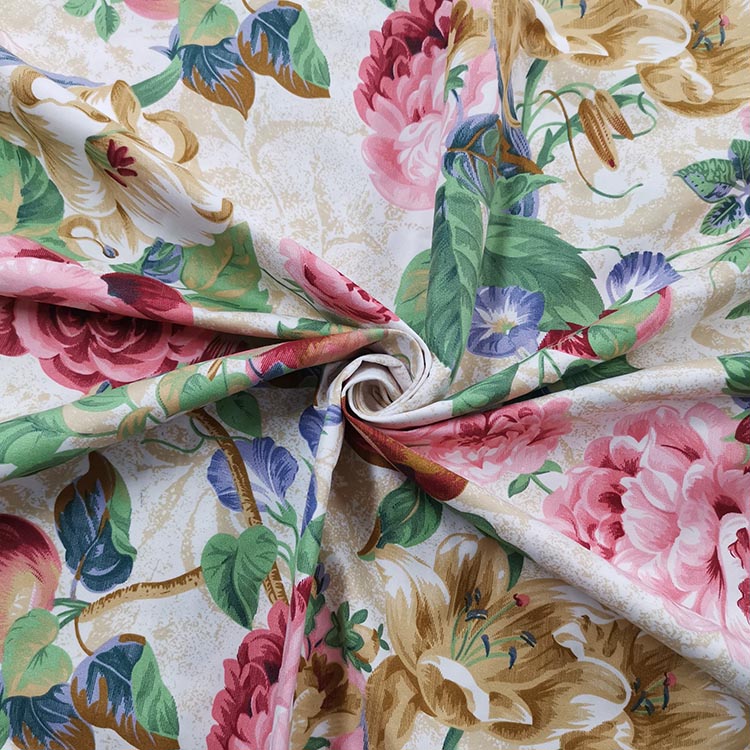
Cotton is one of the most versatile curtain fabrics available. It takes dye exceptionally well, producing rich, consistent colors and sharp pattern definition, and it has a natural matte finish that suits both casual and formal interiors. Cotton curtains hang cleanly without the synthetic sheen that can make cheaper alternatives look inexpensive. The primary limitations of pure cotton for curtains are its tendency to fade with prolonged UV exposure and its susceptibility to shrinkage if washed at high temperatures. Cotton-polyester blends address both issues — the polyester component improves UV resistance and dimensional stability while retaining much of cotton's natural appearance and handle. For most living rooms and bedrooms, a cotton or cotton-blend fabric in a medium weight (around 200–280 gsm) offers an excellent balance of aesthetics, practicality, and affordability.
Linen and Linen Blends
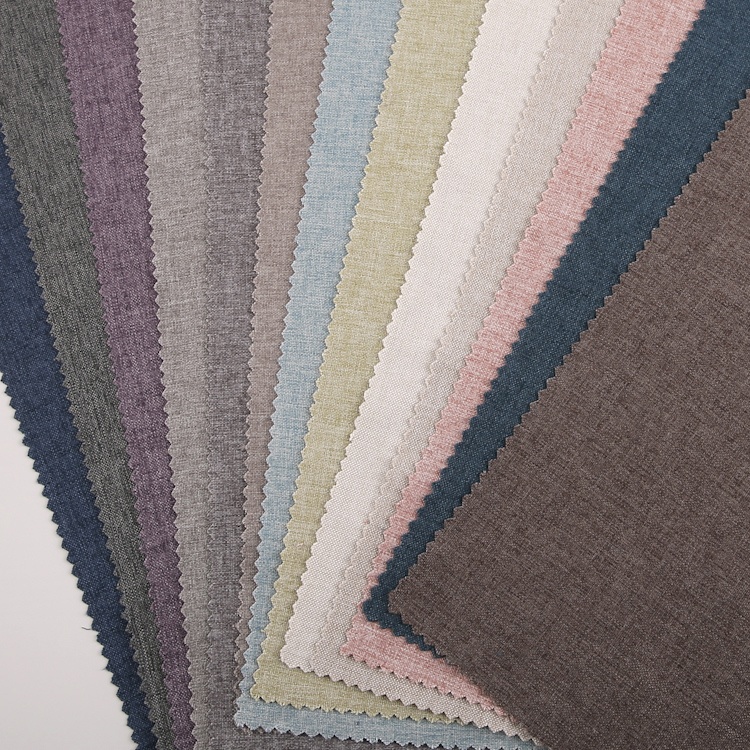
Linen curtain fabric has enjoyed sustained popularity in contemporary and Scandinavian-influenced interiors for its distinctive textured weave, natural off-white and neutral tones, and the relaxed, organic aesthetic it brings to a space. Linen is a strong, durable fiber that becomes softer with washing and age rather than deteriorating. Its natural slubbing — the slight irregularities in the yarn that give it a characterful texture — is a design feature rather than a flaw. The practical limitation of linen is its tendency to crease, which means linen curtains will always have a somewhat relaxed, lived-in appearance rather than a crisp formal drape. Linen-viscose and linen-cotton blends reduce creasing while preserving the textural character. Linen is also naturally resistant to UV degradation, making it a solid choice for south or west-facing rooms with strong sun exposure.
Velvet
Velvet curtain fabric — whether made from cotton, silk, polyester, or a blend — provides exceptional light-blocking capability, outstanding thermal insulation, and a luxurious visual weight that anchors a room with authority. The dense pile of velvet absorbs sound as well as light, making it an excellent choice for home cinemas, bedrooms, or dining rooms where acoustic comfort matters. Modern polyester velvet has become significantly more practical than traditional silk or cotton velvet — it resists crushing, is easier to clean, and costs a fraction of natural fiber velvet while delivering a visually similar result. Velvet is heavy (typically 400–600 gsm), so it requires robust curtain poles, quality heading tape, and sufficient ceiling height to drape effectively without overwhelming the room.
Sheer and Voile Fabrics
Sheer curtain fabrics — including voile, organza, and lightweight linen sheers — serve a fundamentally different function from heavier curtain fabrics. Rather than blocking light or providing privacy at night, sheers diffuse and soften incoming daylight, reduce glare, and create a layer of daytime privacy without eliminating the connection to the outside. They are typically used as a first layer in a double-curtain arrangement, with heavier drapes behind them for evening privacy and thermal performance. Polyester voile is the most widely used sheer fabric — it is inexpensive, washable, and resistant to UV yellowing. Linen sheers and cotton voile offer a more premium appearance with a softer, less synthetic drape but require more careful laundering.
Understanding Fabric Weight, Opacity, and Light Control
The weight of a curtain fabric, measured in grams per square meter (gsm), is one of the most reliable indicators of how it will hang, how much light it will block, and how substantial it will feel and look. The following table gives a practical overview of weight categories and their typical applications:
| Weight Category | Typical GSM Range | Light Transmission | Best Room Use |
| Sheer / Lightweight | 30–100 gsm | High — diffuses light | Living rooms, kitchens, layering |
| Medium Weight | 150–280 gsm | Moderate — filters light | Living rooms, dining rooms, bedrooms |
| Heavyweight | 300–450 gsm | Low — blocks most light | Bedrooms, media rooms, formal areas |
| Blackout (lined or coated) | Varies — coating dependent | Minimal to none | Nurseries, bedrooms, home cinemas |
Blackout performance is achieved either through a tightly woven dense fabric, a foam or acrylic coating applied to the back of the fabric, or the addition of a separate blackout lining sewn behind the decorative face fabric. Coated blackout fabrics are the most effective at eliminating light but can feel stiff and are prone to cracking at fold lines over time. A separate blackout lining sewn to a quality face fabric is generally the more durable and visually satisfying approach, as it allows the decorative fabric to be chosen entirely on aesthetic merit while the lining handles the functional requirement.
Choosing Curtain Fabric by Room: Practical Guidance
Different rooms place very different demands on curtain fabric. A fabric that performs beautifully in a formal living room may be entirely unsuitable for a bathroom or a child's bedroom. Matching the fabric choice to the specific requirements of each room avoids expensive mistakes.
Living Room
The living room is typically where curtains have the greatest visual impact and the most varied functional demands — managing glare during the day, providing privacy in the evening, and contributing significantly to the overall decorative scheme. A two-layer approach works exceptionally well here: sheer linen or polyester voile panels for daytime softness and privacy, with heavier lined cotton, velvet, or jacquard panels behind for evening use and thermal performance. Choose fabrics with at least moderate UV resistance if the room receives direct afternoon sun, and consider interlined curtains (with a layer of bump interlining between face fabric and lining) if thermal insulation is a priority.
Bedroom
Sleep quality is directly affected by light intrusion, making light control the primary functional requirement for bedroom curtain fabric. Blackout or near-blackout performance is strongly recommended, particularly for those sensitive to early morning light or who work night shifts. Velvet, heavyweight lined cotton, and thermal-backed fabrics all achieve good blackout results. Beyond light control, bedroom curtains benefit from fabrics with some acoustic dampening — heavier, denser fabrics reduce external noise intrusion and improve the sense of sanctuary that makes a bedroom restful. Avoid highly textured fabrics that collect dust easily if allergies are a concern.
Kitchen and Bathroom
Moisture, cooking steam, grease particles, and frequent laundering requirements make the kitchen and bathroom the most demanding environments for curtain fabric. In these rooms, practicality must take precedence over luxury. Choose fabrics that are fully machine washable, quick-drying, resistant to mildew, and easy to wipe down. Polyester and polyester-cotton blends perform best in these conditions. Avoid natural fibers like pure linen or silk in bathrooms — they absorb moisture, are slow to dry, and are susceptible to mold in persistently humid environments. Café curtains (covering only the lower half of the window) or simple unlined tab-top panels in a performance fabric are the most practical and easily maintained options for these spaces.
Key Fabric Properties to Check Before Buying
When evaluating curtain fabric — whether buying by the meter to make your own or purchasing ready-made curtains — the following properties should be checked and confirmed before committing to a purchase:
- Shrinkage pre-treatment: Many curtain fabrics, particularly those containing natural fibers, will shrink on first washing if not pre-shrunk. Ask whether the fabric has been pre-washed or sanforized, and always allow a generous hem allowance if making curtains from untreated fabric.
- Pattern repeat: Patterned fabrics have a repeat distance — the length of fabric that must pass before the pattern starts again. For curtains, you need to purchase enough extra fabric to match the repeat across multiple drops, which can add 20–50% to your total fabric requirement depending on the repeat size.
- Lightfastness rating: This measures resistance to fading under UV exposure, rated on a scale of 1–8 (with 8 being the most fade-resistant). For south or west-facing windows with significant sun exposure, look for fabrics with a lightfastness rating of at least 5–6.
- Fabric width: Standard curtain fabric is sold in widths of 137 cm, 150 cm, or occasionally wider. Wider fabric widths reduce the number of seams needed in wide windows and can improve the finished appearance significantly.
- Fullness ratio: Quality curtains require fabric that is 2 to 2.5 times the width of the window track or pole to achieve a properly gathered, full appearance when closed. Skimping on fabric width results in curtains that look flat and mean rather than generous and elegant.
- Fire retardancy: For rental properties, hospitality venues, or commercial spaces, curtain fabric may legally need to meet fire retardancy standards. Check local regulations and confirm whether the fabric carries relevant certification such as BS 5867 (UK) or NFPA 701 (USA) before purchasing for these applications.
Care and Maintenance by Fabric Type
Even the best curtain fabric will deteriorate prematurely if not cared for correctly. The care requirements vary considerably by fiber type, and following the correct procedure makes a significant difference to the longevity and appearance of curtains over time.
- Cotton and cotton blends: Most can be machine washed at 30–40°C. Avoid high spin speeds on unlined curtains to reduce creasing. Rehang while still slightly damp — the weight of the fabric will pull out minor creases as they dry in situ.
- Linen: Wash at 30°C maximum to minimize shrinkage. Linen creases readily — rehang immediately after washing and allow to dry on the pole for the best result. Do not tumble dry at high heat.
- Velvet: Polyester velvet can often be gently machine washed at 30°C on a delicate cycle, but always check the care label. Never wring or tumble dry velvet — the pile will crush and may not fully recover. Steam rather than iron velvet, holding the iron above the pile without direct contact.
- Sheers and voile: Most polyester sheers are fully machine washable at 30–40°C and dry quickly. Avoid biological detergents on white or off-white sheers as they can cause yellowing over time.
- Lined curtains: Where the face fabric and lining have different care requirements, dry cleaning is usually the safest approach to avoid differential shrinkage between the two layers that would cause the curtain to pucker or distort.
Regular vacuuming with a soft brush attachment every few months removes dust accumulation that, over time, degrades fibers and dulls colors. Rotating lined curtains by occasionally reversing them on the pole — where the construction allows — distributes UV exposure more evenly across the fabric and extends the time before fading becomes noticeable. Taking care of quality curtain fabric is a modest investment of time that pays back significantly in the longevity and sustained appearance of what is, in most rooms, one of the largest and most visible soft furnishing elements in the space.