

 English
 中文简体
中文简体

Content
- 1 Understanding Curtain Fabric Weight and Its Effect on Drape
- 2 Major Curtain Fabric Types and Their Practical Characteristics
- 3 Matching Curtain Fabric to Room Function and Light Exposure
- 4 The Critical Role of Curtain Lining
- 5 Fabric Performance Finishes and Treatments Worth Knowing
- 6 Care, Maintenance, and Longevity Considerations
Choosing curtain fabric is one of the most consequential decisions in any interior design project, yet it is frequently reduced to a question of color and pattern alone. In reality, the fabric you select determines how much light enters a room, how much privacy you have at different times of day, how well the curtain hangs and drapes, how it responds to humidity and temperature changes, and how long it lasts before fading, sagging, or wearing through at the heading. A curtain that looks beautiful on a swatch card can disappoint profoundly when hung at a real window in real light conditions if the fabric weight, weave structure, or fiber content was not matched thoughtfully to the room's function and exposure. This guide works through every major consideration — from fiber type and weave to lining choices and care requirements — so that your curtain fabric decision is grounded in practical knowledge rather than aesthetic impulse alone.
Understanding Curtain Fabric Weight and Its Effect on Drape
Fabric weight is the single most important structural characteristic of any curtain fabric, and it determines almost everything about how a finished curtain behaves at the window. Weight is measured in grams per square meter (GSM) and ranges from as low as 80 GSM for sheer voile fabrics to over 400 GSM for heavyweight interlined wool or velvet curtains. Understanding where your chosen fabric sits on this scale — and what that means in practice — is the starting point for every fabric selection decision.
Lightweight fabrics (80 to 150 GSM) drape softly and fluidly, pooling gracefully on the floor when cut generously long. They move in air currents, creating a living, organic quality at the window that heavier fabrics cannot achieve. However, they require more fullness — typically 2.5 to 3 times the window width — to hang without looking skimpy, and they offer minimal thermal insulation or sound absorption. Medium-weight fabrics (150 to 250 GSM) offer the broadest versatility, hanging with enough structure to hold pleats and headings crisply while still draping naturally between folds. Heavyweight fabrics (250 GSM and above) deliver maximum light blocking, thermal performance, and acoustic benefit, but require robust curtain tracks or poles and may need professional installation due to their considerable finished weight per drop.
Major Curtain Fabric Types and Their Practical Characteristics
Each fabric type brings a distinct set of functional and aesthetic properties. Selecting between them requires matching those properties to the specific demands of the room where the curtains will hang.
Cotton and Cotton Blends
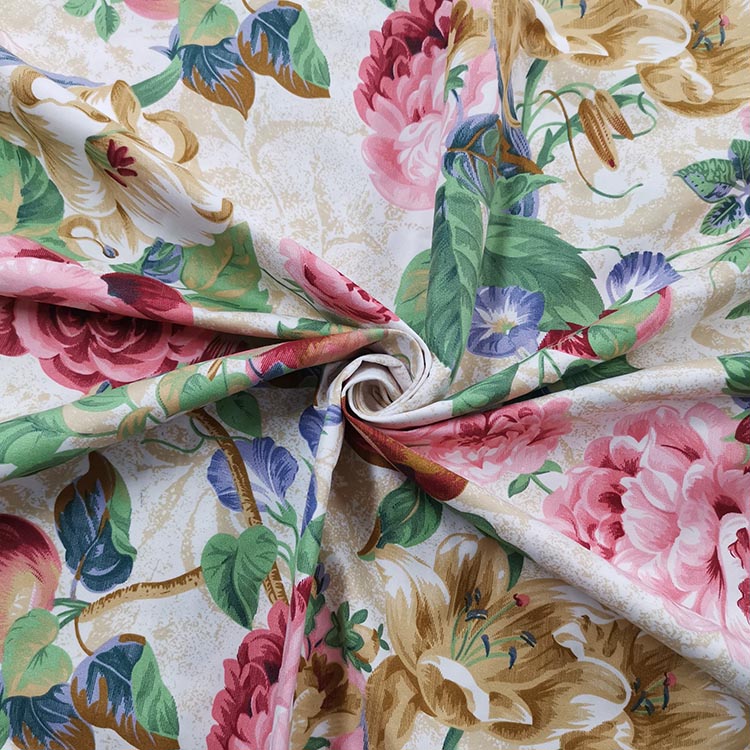
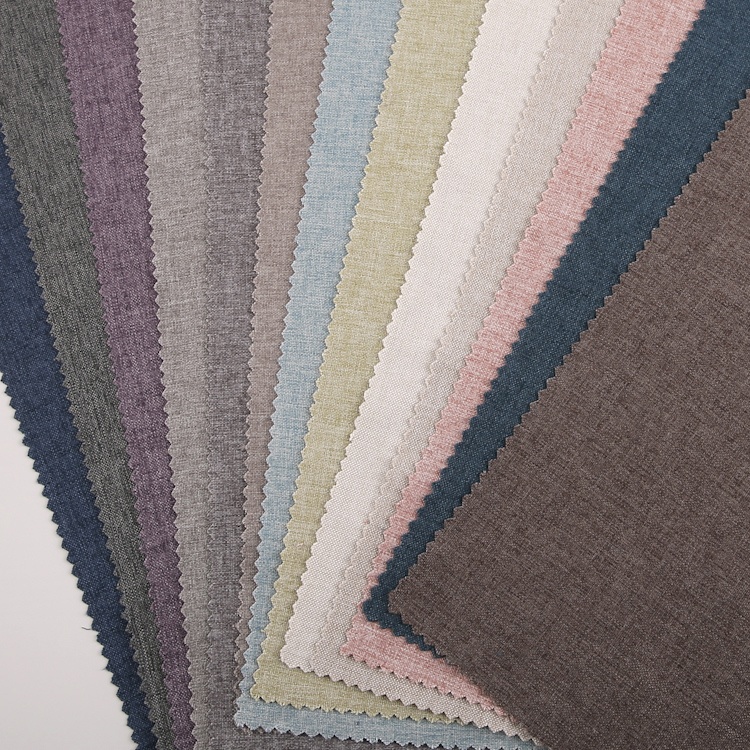
Cotton is the most versatile and widely used curtain fabric base fiber. It accepts dye evenly, producing clear, consistent color across the full width of a curtain drop, and it handles printing and weaving processes that create the enormous variety of patterns — from fine geometric prints to large-scale botanical designs — that define the mainstream curtain fabric market. Cotton curtain fabrics range from lightweight muslin and voile constructions through medium-weight canvas and twill weaves to heavyweight duck cloth and denim-style fabrics used for a relaxed, casual aesthetic. The primary weakness of cotton in curtain applications is its susceptibility to UV degradation — direct sunlight progressively breaks down cotton fiber, causing fading and eventual rotting along the fold lines within 3 to 7 years depending on sun exposure intensity. Cotton-polyester blends address this weakness by incorporating UV-resistant synthetic fibers while retaining cotton's natural appearance and dyeability.
Linen and Linen Blends
Linen curtain fabric has experienced a sustained surge in popularity driven by the broader interior design trend toward natural materials and relaxed, organic aesthetics. Pure linen has a characteristic slubby texture — irregular thickening and thinning in the yarn created by the natural variation in flax fiber — that gives it a handmade quality impossible to replicate synthetically. Linen is naturally stronger than cotton at equivalent weights, resistant to pilling, and has excellent moisture-wicking properties that make it well suited to kitchens, bathrooms, and high-humidity rooms where other fabrics might retain moisture and develop mildew. The practical challenges of pure linen are its tendency to crease heavily and its higher cost compared to cotton equivalents. Linen-cotton and linen-viscose blends retain the textural character of linen while reducing creasing and cost, and these blends now dominate the mid-market linen curtain fabric category.
Velvet
Velvet curtain fabric is produced by weaving a pile — short loops of fiber that are cut to create the characteristic dense, soft surface — onto a base ground weave. The pile refracts light directionally, meaning velvet appears to change shade and depth when viewed from different angles or when the pile is brushed in different directions. This light-interactive quality makes velvet one of the most visually luxurious curtain fabrics available. Beyond aesthetics, velvet's dense pile construction provides exceptional light-blocking capacity, significant thermal insulation, and measurable sound absorption — making it a practical as well as decorative choice for bedrooms, home cinemas, and formal reception rooms. Cotton velvet is the traditional premium choice; polyester velvet offers similar visual impact at lower cost with better resistance to crushing and faster drying. Velvet curtains must hang with enough fullness — a minimum 2 to 2.5 times window width — for the pile to compress into generous, deep folds that show the fabric at its best.
Silk and Faux Silk
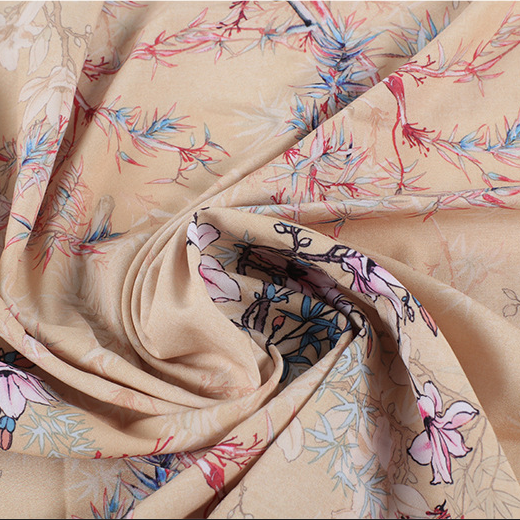
Pure silk curtain fabric produces an unmatched luminosity — its triangular fiber cross-section refracts light with a prismatic quality that synthetic fibers approximate but never fully replicate. Silk curtains are at their most spectacular in rooms where natural or artificial light strikes the fabric at an angle, revealing the characteristic sheen shift between highlight and shadow. The practical limitations of silk are significant: it is highly susceptible to UV damage (fading and shattering along fold lines within 2 to 4 years in direct sun without full lining protection), it is expensive, and it requires dry cleaning. For most residential applications, high-quality faux silk — typically woven from fine polyester filament yarns with a satin or dupion weave structure — delivers 80 to 90% of the visual effect of real silk at a fraction of the cost and with dramatically improved durability and care convenience.
Sheer and Voile Fabrics
Sheer curtain fabrics — voile, organza, gauze, and fine lace — serve a specific functional role: admitting diffused natural light while providing daytime privacy by obscuring clear sightlines into the room from outside. They are typically hung as a first layer at the window, with heavier opaque curtains behind for nighttime privacy and light control. Sheer fabrics are almost universally made from polyester or polyester-cotton blends, which resist the accelerated UV degradation that would quickly destroy natural fiber sheers in the sun-exposed position they occupy. The quality differential between budget and premium sheer fabrics is significant: cheap voile has visible weaving irregularities, goes limp quickly, and develops a yellowish cast with UV exposure, while quality sheers maintain their crisp, luminous appearance for years.
Matching Curtain Fabric to Room Function and Light Exposure
The same fabric specification that works perfectly in one room can perform poorly in another. Aligning fabric choice with the specific functional requirements of each room is the most practical framework for decision-making.
| Room | Key Requirements | Recommended Fabric Types | Fabrics to Avoid |
| Bedroom | Blackout or near-blackout, thermal, acoustic | Velvet, lined cotton or linen, blackout-lined polyester | Unlined sheers, lightweight cotton without lining |
| Living Room | Style-led, moderate light control, durability | Lined linen, cotton twill, faux silk, velvet | Pure silk in south-facing windows, unlined lightweight cotton |
| Kitchen | Moisture resistance, easy washing, light admission | Polyester, cotton-polyester blend, linen blend | Velvet, silk, heavyweight unlined fabrics |
| Bathroom | Humidity resistance, privacy, quick drying | Polyester voile, linen, synthetic sheers | Pure cotton without treatment, velvet, silk |
| Home Office | Glare reduction, adjustable light, concentration | Medium-weight linen, cotton with interlining, layered sheer and block | Full blackout without sheer layer, highly reflective fabrics |
| Children's Room | Blackout for sleep, washable, durable | Blackout-lined polyester or cotton, easy-care blends | Dry-clean-only fabrics, delicate sheers, pure silk |
The Critical Role of Curtain Lining
Lining is not an optional luxury add-on for curtain fabric — it is a functional component that dramatically affects light control, thermal performance, UV protection for the face fabric, and the quality of the drape. Understanding the lining options and their specific benefits allows you to extract the maximum performance from your chosen face fabric regardless of its inherent weight or opacity.
Standard Lining
Standard curtain lining is typically a satin-weave cotton or cotton-polyester fabric in cream or white. It adds body to the face fabric, helping it hang in more structured folds and reducing the tendency of lightweight fabrics to billow excessively in air currents. Standard lining blocks approximately 50 to 70% of incoming light — sufficient for living rooms and dining rooms where some ambient light admission is desirable — and provides a meaningful barrier against UV radiation reaching the face fabric, extending its color life by a factor of 2 to 3 compared to unlined hanging.
Blackout Lining
Blackout lining incorporates a dense foam or acrylic coating on the reverse face that blocks virtually all light transmission — typically 99% or more when properly installed with side returns and a close header to the pole or track. Quality blackout lining also provides significant thermal benefit by reflecting radiant heat back into the room in winter and blocking solar heat gain in summer. It adds considerable weight to the finished curtain, which must be factored into pole and bracket load ratings. For children's bedrooms, home cinemas, and night shift workers' bedrooms, blackout lining transforms a decorative face fabric into a functional sleep environment tool.
Interlining
Interlining is a soft, wadding-like fabric sandwiched between the face fabric and the lining. It adds substantial weight and body that transforms even a lightweight face fabric into a curtain with the heavy, sumptuous drape typically associated with high-end interiors. Interlined curtains hang in deep, rounded folds rather than the flatter, sharper folds of non-interlined curtains, and provide the highest level of thermal insulation and sound absorption of any curtain construction. The added weight requires robust fixings and, typically, professional making-up to ensure the interlining is locked properly to the face fabric and lining without bubbling or shifting over time.
Fabric Performance Finishes and Treatments Worth Knowing
Many curtain fabrics are available with applied performance treatments that extend their functional capability beyond what the base fiber alone would provide. These finishes are worth understanding when comparing fabrics at similar price points.
- Flame retardant (FR) treatment: Mandatory for curtains in commercial, hospitality, and contract environments in most countries. Residential buyers increasingly specify FR-treated fabrics in homes with open fires or wood burners. FR treatment can be factory-applied to the fabric during finishing or applied post-installation as a spray treatment, though spray treatments require periodic reapplication to maintain effectiveness.
- Soil and stain resistance: Fluoropolymer or silicone-based treatments create a surface barrier that causes liquids to bead and roll off rather than penetrating the fiber. Particularly useful for curtains in dining rooms, kitchens, and homes with young children or pets. Note that these treatments reduce the fabric's moisture vapour transmission and may affect dye uptake in the event of spot re-dyeing.
- UV stabilization: Applied particularly to synthetic fabrics used in conservatories and south-facing windows, UV stabilizers absorb ultraviolet radiation before it can degrade the polymer chains of the fiber, significantly extending color fastness and structural integrity in high-sun-exposure positions.
- Antimicrobial treatment: Silver ion or zinc-based antimicrobial finishes inhibit the growth of mold, mildew, and bacteria on the fabric surface. Most relevant for bathroom, kitchen, and conservatory curtains in humid climates where moisture on fabric surfaces creates conditions for microbial growth.
Care, Maintenance, and Longevity Considerations
The practical longevity of curtain fabric is determined by a combination of the fiber's inherent durability, the quality of any performance treatments applied, the UV exposure at the specific window, and how well the care requirements are met over time. Before purchasing any curtain fabric, confirm its care requirements and honestly assess whether they are practical for your household.
Machine-washable fabrics — most polyester, cotton-polyester blends, and some pure cottons — offer the most practical long-term care path for family homes. They can be removed, washed, and rehung annually or whenever soiling requires it without specialist intervention. Dry-clean-only fabrics — including most velvets, pure silks, and heavily interlined curtains — incur ongoing cleaning costs and logistical complexity each time cleaning is required, and repeated dry cleaning can cause subtle changes in color and finish over time.
Regular light maintenance — gently vacuuming curtain fabric with a soft brush attachment every 2 to 3 months — removes dust accumulation that would otherwise embed into the fiber structure and dull the fabric's appearance. Rotating curtains seasonally in rooms with strong directional sun exposure ensures that UV degradation is distributed evenly across the fabric rather than concentrated on the most-exposed folds. These simple habits, combined with a well-chosen lining to protect the face fabric from UV radiation, are the most cost-effective way to extend curtain fabric life and preserve the investment made in quality material.