

 English
 中文简体
中文简体

Content
- 1 Why Jacquard Fabric Is the Preferred Choice for Upholstery OEM Projects
- 2 Defining Your Technical Specifications Before Approaching Suppliers
- 3 How to Evaluate and Qualify Jacquard Fabric Suppliers
- 4 Understanding Minimum Order Quantities and Their Impact on Sourcing Strategy
- 5 The Sampling and Approval Process for Custom Jacquard Upholstery Fabric
- 6 Protecting Your Custom Design Through Intellectual Property Agreements
- 7 Managing Lead Times and Logistics for Jacquard Fabric OEM Orders
Why Jacquard Fabric Is the Preferred Choice for Upholstery OEM Projects
Jacquard fabric occupies a unique position in the upholstery market because its patterns and textures are woven directly into the structure of the cloth rather than printed or embroidered onto the surface. This means the design is integral to every thread, giving the fabric exceptional durability, dimensional stability, and a visual depth that printed alternatives cannot replicate. For OEM buyers supplying furniture manufacturers, hospitality fit-out companies, automotive interior brands, or luxury retail upholstery lines, this structural quality translates into finished products that hold their appearance through years of use without fading, peeling, or wear-through at pattern edges.
The Jacquard loom, controlled today by digital dobby and computerized Jacquard heads rather than the original punch-card system, allows virtually unlimited pattern complexity. Damasks, brocades, tapestry weaves, and geometric repeats that would be impossible to reproduce consistently through other methods are routine outputs of modern Jacquard machinery. For OEM buyers sourcing at scale, this means custom colorways, branded motifs, and proprietary repeat patterns can be produced with manufacturing consistency across thousands of meters—a critical requirement when upholstering entire hotel room blocks, office furniture ranges, or vehicle interior collections where visual uniformity is non-negotiable.
Defining Your Technical Specifications Before Approaching Suppliers
The single most common cause of failed custom Jacquard fabric sourcing projects is approaching manufacturers with insufficient technical specifications. Suppliers cannot produce accurate samples or reliable quotations based on vague descriptions. Before contacting any mill or trading company, you need to have a clear written specification document that covers every measurable attribute of the fabric you require.
Fiber Composition and Yarn Specification
The fiber content of your Jacquard upholstery fabric determines its abrasion resistance, colorfastness, hand feel, fire retardancy behavior, and cleaning compatibility. Polyester Jacquard is the most widely sourced option for commercial upholstery because it offers excellent rub fastness, resistance to pilling, and colorfast performance under UV exposure. Cotton-polyester blends introduce a softer, more natural hand feel while retaining much of polyester's durability. Viscose or rayon yarns add sheen and drape but sacrifice abrasion resistance, making them more appropriate for decorative upholstery on low-traffic pieces than for seating in public or commercial environments. Specify the warp and weft yarn counts, twist direction, and whether textured or flat filament yarn is required, as these details directly affect the finished fabric's surface character and weaving behavior.
Weight, Construction, and Repeat Dimensions
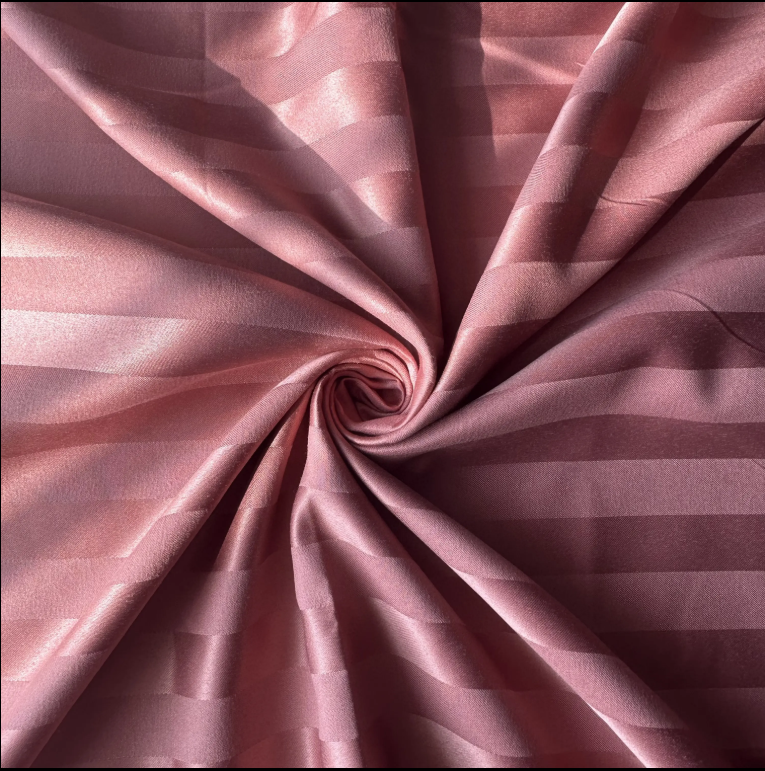
Upholstery Jacquard fabric is typically specified at weights between 280 gsm and 600 gsm, with heavier constructions used for tight-upholstered seating and lighter weights for cushion covers or decorative panel applications. The weave construction—whether a satin-faced brocade, a double-cloth construction, or a flat damask weave—affects both the fabric's thickness and its ability to conform to curved upholstery shapes without puckering at seams. The pattern repeat size must be specified in both the warp and weft directions, as this determines fabric consumption per upholstered piece and directly affects the material cost calculation. Large repeats that require pattern matching during cutting increase fabric waste significantly, which must be factored into pricing negotiations with the mill.
Performance Standards Required for Your End Market
Different end markets impose different mandatory or preferred performance standards on upholstery fabric. Commercial contract furniture for offices, hotels, and public spaces typically requires compliance with standards such as EN 1021 (cigarette and match ignition resistance), BS 5852 (crib fire tests for UK hospitality), NFPA 260 or California TB 117-2013 for the US market, and Martindale abrasion resistance of at least 25,000 cycles for light contract use or 100,000 cycles for heavy contract environments. Automotive upholstery requires compliance with vehicle-specific OEM test protocols covering flammability, fogging, and chemical emissions. Including your target performance standards in the specification document allows suppliers to immediately assess whether their standard constructions can meet your requirements or whether the weave and finishing processes need adjustment.
How to Evaluate and Qualify Jacquard Fabric Suppliers
The global Jacquard weaving industry is concentrated in several key manufacturing regions, each with distinct capabilities, quality levels, and pricing tiers. China, India, Turkey, Belgium, and Italy are the principal sources of custom Jacquard upholstery fabric at various quality and price points. Understanding what differentiates suppliers within and across these regions is essential for building a reliable sourcing relationship.
- Verify loom technology and capacity: Mills operating modern electronic Jacquard heads from manufacturers such as Stäubli or Bonas can achieve higher pattern complexity, tighter repeat registration, and faster design changeover than older mechanical loom operations. Ask suppliers to specify the number of hooks on their Jacquard heads, as this determines the maximum pattern complexity achievable. A 10,000-hook system supports significantly more intricate designs than a 2,688-hook entry-level configuration.
- Assess in-house dyeing and finishing capability: Suppliers with integrated dyeing and finishing operations offer tighter control over colorway consistency and can more reliably meet color standards across multiple production runs. Mills that outsource dyeing to third-party dye houses introduce additional quality variability and longer lead times. Request lab dip approval samples early in the qualification process to evaluate the mill's ability to match your target colorways precisely.
- Request test reports and certifications: Any credible supplier to the commercial upholstery market should be able to provide third-party test reports for abrasion resistance, pilling, colorfastness to light and rubbing, and relevant fire performance standards. Ask for certificates for the specific fabric construction you are sourcing, not generic mill certifications that may not apply to your specification. Oeko-Tex Standard 100 certification is increasingly expected by European buyers as evidence that the fabric is free from harmful chemical residues.
- Evaluate design development support: For fully custom patterns, the mill's design team capability matters significantly. Suppliers with experienced CAD designers who understand Jacquard weave point paper and color separation can translate your artwork or concept into a weavable design efficiently. Poor design preparation is a leading cause of sampling delays and unexpected development costs in custom Jacquard projects.
- Conduct a factory audit or request a third-party audit report: For significant OEM commitments, a factory audit covering production capacity, quality control procedures, inventory management, and working conditions is standard practice. Many international buyers use audit platforms such as SGS, Bureau Veritas, or Intertek to generate standardized audit reports. Suppliers who resist auditing or cannot provide documentation of previous audit results should be treated with caution regardless of their sample quality.
Understanding Minimum Order Quantities and Their Impact on Sourcing Strategy
Minimum order quantities (MOQs) for custom Jacquard upholstery fabric vary widely depending on the supplier type, the complexity of the pattern, and the number of colorways being produced. Understanding the cost structure behind MOQs allows buyers to negotiate more effectively and structure their orders to minimize capital tied up in fabric inventory.
| Supplier Type | Typical MOQ per Colorway | Best Suited For |
| Large integrated mill | 500–1,000 meters | High-volume OEM, hospitality contracts |
| Mid-size weaving factory | 200–500 meters | Mid-scale furniture brands, retail collections |
| Small specialist mill | 50–200 meters | Bespoke projects, design trials, luxury pieces |
| Trading company with mill access | 100–300 meters | Buyers needing sourcing flexibility across patterns |
The MOQ for a custom pattern is driven largely by the loom setup cost, which is amortized across the production run. A complex custom Jacquard pattern may require four to eight hours of loom setup time before the first meter of usable fabric is produced. This setup cost is fixed regardless of order quantity, which means smaller orders carry a proportionally higher cost per meter. Where possible, consolidating multiple colorways of the same pattern into a single production run reduces individual colorway setup costs and can be used as a negotiating point to lower the per-meter price even if the total order volume remains modest.
The Sampling and Approval Process for Custom Jacquard Upholstery Fabric
Custom Jacquard fabric sampling is a multi-stage process that typically requires three to six weeks from initial brief to approved production sample, and in complex cases with multiple design revision cycles, can extend to twelve weeks or more. Understanding each stage of the sampling process helps buyers set realistic development timelines and avoid costly delays caused by inadequate sampling briefs or unclear approval criteria.
Lab Dip and Color Standard Approval
Before any weaving begins, the dyehouse produces small dyed yarn samples in your target colorway called lab dips. These must be evaluated under standardized lighting conditions—typically D65 daylight and TL84 store light at minimum—and approved against a physical color standard or Pantone reference. Requiring lab dip approval before loom setup prevents the most expensive form of sampling error: a correctly woven fabric in the wrong color. Allow two to three rounds of lab dip adjustment for critical or complex colorways, as achieving simultaneous color accuracy across multiple yarn types used in the same fabric construction is technically demanding.
Strike-Off Sample Evaluation
A strike-off is the first woven sample produced on the production loom using approved yarns and the finalized weave program. Strike-offs are typically 2 to 5 meters in length—enough to evaluate the full pattern repeat, color balance across the design, fabric hand, weight, and construction quality. Evaluate the strike-off against your written specification on every measurable parameter: measure the actual weight per square meter, check the warp and weft density against specification, confirm the repeat dimensions match the brief, and assess whether the color rendering of the pattern matches your design intent. Any deviations should be documented in writing and returned to the supplier with specific correction instructions rather than general comments, which are difficult for the mill's technical team to act on precisely.
Pre-Production Testing Requirements
Before approving a strike-off for bulk production, submit a sample to an accredited testing laboratory for verification against your target performance standards. This is particularly important for fire performance certification, where a fabric that passes at sample stage can fail in bulk production if yarn sourcing or finishing chemistry changes between the sample and production runs. Establish a requirement in your purchase terms that bulk fabric must be accompanied by test reports from the production batch, not only from the development sample, and reserve the right to conduct random batch testing on delivery as a condition of final payment release.
Protecting Your Custom Design Through Intellectual Property Agreements
Custom Jacquard patterns developed for OEM upholstery projects represent a significant design investment, and protecting that investment through appropriate contractual agreements with your supplier is essential. Without explicit exclusivity and non-disclosure provisions, a mill that produces your custom pattern can legally supply the same design to competing buyers unless contractually prohibited from doing so.
Before sharing proprietary artwork, pattern files, or design briefs with any supplier, have them sign a non-disclosure agreement (NDA) that covers both the design content and the existence of the development project. Once sampling is complete and you commit to bulk production, execute a formal exclusivity agreement that specifies the geographic territory, product category, and duration of exclusivity for the pattern. Clearly state in writing that all design files, weave programs, and CAD data developed specifically for your pattern remain your intellectual property and may not be used, shared, or sold by the mill to any third party. Some buyers further protect their designs by registering the pattern as a textile design with the relevant intellectual property authority in their home country before commencing overseas sampling, providing a legal framework for enforcement in the event of infringement.
Managing Lead Times and Logistics for Jacquard Fabric OEM Orders
Lead times for custom Jacquard upholstery fabric from order confirmation to delivery typically range from eight to fourteen weeks for established patterns with approved samples, and twelve to twenty weeks for new pattern development inclusive of sampling rounds. Building accurate lead time expectations into your project planning prevents the common scenario where approved fabric arrives after the furniture production schedule has already been compromised.
- Confirm loom scheduling at order placement: Mills that carry significant order backlogs may not schedule your production immediately upon receipt of your purchase order. Request written confirmation of the production start date and target completion date at order placement, and follow up at the midpoint of the production window to confirm the schedule is being maintained.
- Specify roll length and packaging requirements precisely: Upholstery fabric rolls are typically wound to 50 or 100 meters per roll. If your cutting operations or storage systems have specific roll weight limits, specify the maximum roll weight or length in your purchase order. Inconsistent roll lengths received from the mill can disrupt fabric utilization calculations and cutting schedules at your end.
- Arrange pre-shipment inspection for large orders: For orders exceeding 500 meters or high-value custom projects, commissioning a pre-shipment inspection by a third-party quality agent at the mill before goods are packed verifies that the production quality matches the approved sample, the correct quantity has been produced, and the fabric is packed and labeled to your specification. Identifying discrepancies before shipment is substantially cheaper and faster to resolve than discovering them after the goods have cleared customs.
- Plan for customs classification and import documentation: Jacquard upholstery fabric is classified under specific HS codes that determine import duty rates. Confirm the correct HS code classification with your customs broker before the first shipment to avoid duty assessment disputes on arrival. Ensure the supplier provides a mill certificate, material composition declaration, and country of origin certificate with each shipment, as these documents are frequently required for customs clearance and for compliance with import regulations in major markets.