

 English
 中文简体
中文简体

Content
- 1 What Is Oxford Fabric and Why Does Correct Identification Matter?
- 2 Understanding the Oxford Weave Structure
- 3 Visual Identification Methods
- 4 Physical and Mechanical Testing Methods
- 5 Fiber Content Identification in Oxford Fabric
- 6 Oxford Fabric Variants and How to Tell Them Apart
- 7 Common Fabrics Confused with Oxford and How to Differentiate Them
- 8 A Practical Identification Checklist for Oxford Fabric
What Is Oxford Fabric and Why Does Correct Identification Matter?
Oxford fabric is a woven textile originally developed in Scotland during the 19th century and named after the University of Oxford. It is characterized by a basket weave structure — a variation of the plain weave in which two or more warp yarns interlace with two or more weft yarns simultaneously, creating a distinctive checkerboard-like cell pattern on the fabric surface. This construction gives Oxford cloth its recognizable texture, durability, and slight sheen that distinguishes it from plain weave fabrics of similar weight.
Correct identification of Oxford fabric matters because it is frequently imitated or mislabeled in the market. A buyer sourcing Oxford cloth for shirt manufacturing, bag production, or outdoor gear faces a different performance expectation than someone purchasing a plain polyester weave. Misidentification leads to choosing the wrong finishing process, the wrong care protocol, or the wrong application entirely. This guide provides a systematic technical approach to identifying genuine Oxford fabric through visual inspection, physical testing, weave analysis, and fiber content evaluation.
Understanding the Oxford Weave Structure
The defining characteristic of Oxford fabric is its basket weave construction. In a standard plain weave, each single warp yarn alternately passes over and under each single weft yarn. In a basket weave — which is the foundation of Oxford cloth — two warp yarns travel together over and under two weft yarns in unison. This 2×2 interlacing produces a slightly raised, square-cell texture visible on both sides of the fabric under close inspection.
Some Oxford fabrics use a modified basket weave called a pinpoint weave, where the ratio shifts to a 2×1 interlacing — two weft yarns traveling under a single warp. Pinpoint Oxford is finer, smoother, and denser than standard Oxford and is used primarily in dress shirts. Royal Oxford uses an even more complex dobby weave that produces a subtle diagonal pattern across the basket cells, giving the fabric a slight sheen and a more luxurious hand feel. Identifying which variant you are working with requires examining the weave ratio under magnification.
Visual Identification Methods
Visual inspection is the first and most accessible step in identifying Oxford fabric. With practice, the weave pattern is recognizable without tools, though a magnifying loupe of 10× or higher significantly improves accuracy.
Examining the Weave Pattern Under Magnification
Hold the fabric up to a strong light source and examine the surface with a loupe or magnifying glass. In Oxford fabric, you will see a regular grid of small square cells formed by pairs of yarn floating over pairs of crossing yarn. The cells should be consistent in size and evenly distributed across the fabric face. In plain weave fabrics, by contrast, no floating occurs — each yarn simply alternates one over, one under — producing a much tighter, flatter surface with no visible cell structure.
Look also at the yarn composition within each cell. Traditional Oxford cloth, particularly in shirt fabric, uses a two-color yarn arrangement — a colored warp yarn paired with a white weft yarn — which produces the characteristic tonal variation that makes Oxford cloth appear subtly different in shade depending on the viewing angle. This two-tone effect is a reliable visual indicator when present.
Assessing Surface Texture and Sheen
Oxford fabric has a matte to semi-matte surface in its standard form, with a slight texture arising from the basket weave cell structure. Royal Oxford, by contrast, has a visible low-level sheen from the more complex dobby float structure. Run your fingertips across the fabric — Oxford cloth has a gentle, slightly pebbly texture rather than the flat smoothness of plain weave or the pronounced texture of canvas or denim. The surface should feel uniform with no obvious diagonal ridges (which would indicate a twill weave) and no pilling or looping (which would indicate a knit structure).
Physical and Mechanical Testing Methods
When visual inspection is inconclusive — particularly with densely woven or coated Oxford fabric — physical tests provide additional confirmation.
Thread Count and Yarn Pairing Analysis
Use a thread counting glass (pick counter) placed on the fabric surface to count the number of warp and weft yarns per square inch or centimeter. In Oxford fabric, the yarns are typically paired, meaning the actual number of yarn pairs per unit is half the apparent yarn count when threads run together. Standard Oxford shirt fabric typically has 50–80 thread pairs per inch in both directions. If you can separate and count individual threads using a needle, confirm that they travel in pairs through the weave rather than individually — this pairing is the mechanical fingerprint of the basket weave structure.
Drape and Hand Feel Assessment
Oxford cloth made from cotton or cotton-polyester blends has a moderate drape — it falls with some body rather than clinging like a lightweight jersey or hanging stiffly like canvas. When folded and released, it recovers slowly and retains a slight crease, consistent with its basket weave construction. Oxford fabric made from 100% polyester or nylon — common in bag and outdoor applications — will have a crisper hand and more immediate shape recovery due to the synthetic fiber's inherent resilience. Pulling lightly on the bias (diagonal) of Oxford fabric reveals moderate stretch with minimal distortion, unlike a plain weave which shows greater diagonal give.
Unraveling a Thread Sample
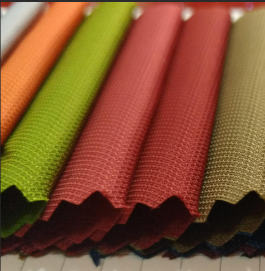
One of the most definitive mechanical tests is to carefully unravel a few yarns from the edge of a sample. In Oxford fabric, when you pull a weft thread, you will find it has been interlacing with two warp threads simultaneously rather than one. The extracted thread should show the regular over-two, under-two (or over-two, under-one in pinpoint variants) interlacing pattern along its length. This is difficult to fake and is a near-conclusive confirmation of the basket weave structure when clearly observed.
Fiber Content Identification in Oxford Fabric
Oxford fabric is produced in several fiber compositions, each with distinct performance properties and identification characteristics. Knowing the fiber content is as important as identifying the weave, since the same basket weave structure is used across cotton, polyester, nylon, and blended Oxford fabrics for very different end uses.
| Fiber Type | Burn Test Result | Hand Feel | Common Application |
| 100% Cotton | Burns cleanly, ash crumbles, smells like paper | Soft, breathable, absorbs moisture | Dress shirts, casual wear |
| Polyester Oxford | Melts and beads, black smoke, chemical smell | Crisp, smooth, moisture-resistant | Bags, tents, outdoor gear |
| Nylon Oxford | Melts, drips, self-extinguishes, celery-like smell | Silky, lightweight, very strong | Backpacks, luggage, rainwear |
| Cotton-Polyester Blend | Burns and melts simultaneously, mixed ash and bead | Softer than pure polyester, less wrinkling than cotton | Workwear, uniform shirts |
The burn test should always be performed on a small clipped thread sample in a safe environment, away from flammable materials. Hold the thread with metal tweezers and bring it to a small flame, observing the burning behavior, residue, and odor. Never perform this test on a large piece of fabric or inside a building without adequate ventilation.
Oxford Fabric Variants and How to Tell Them Apart
Several related fabric types share the Oxford name but differ meaningfully in construction and intended use. Knowing how to distinguish them prevents misspecification.
- Standard Oxford — uses a 2×2 basket weave with heavier yarn. Has a visibly textured surface with prominent cell structure. Most commonly used in casual shirts and entry-level bag fabrics. Thread pairs are visible to the naked eye in most constructions.
- Pinpoint Oxford — uses a 2×1 basket weave with finer yarn. The surface is significantly smoother and finer than standard Oxford and may require a loupe to confirm the weave ratio. Used almost exclusively in dress shirts. Thread count is higher, typically 80–120 pairs per inch.
- Royal Oxford — produced on a dobby loom with a more complex float pattern that creates a micro-diagonal texture across the fabric face. Has a visible low-level sheen distinguishable from flat matte Oxford. Most prestigious Oxford variant for formal shirting, often made from two-ply yarns for added smoothness and durability.
- 600D / 900D / 1200D Oxford (Polyester) — the number refers to the denier of the yarn, not the weave variant. Higher denier Oxford fabrics are heavier, stiffer, and more abrasion-resistant. Used in luggage, tarpaulins, and industrial covers. Often coated with PU or PVC on the reverse side, which can make visual weave identification from the back impossible — inspect the face of the fabric only.
Common Fabrics Confused with Oxford and How to Differentiate Them
Oxford fabric is frequently confused with other woven textiles at the point of purchase or during material inspection. The following comparisons clarify the key differences.
Oxford vs. Poplin: Poplin (also called broadcloth) is a plain weave fabric with a tight, smooth surface and a very slight horizontal rib from the use of heavier weft yarns. Under magnification, poplin shows a strict 1×1 over-under interlacing with no paired yarns and no cell structure. Its surface is flatter and smoother than Oxford, with no visible basket weave grid. Poplin is lighter and less textured and is often mistaken for pinpoint Oxford — the absence of yarn pairing is the definitive distinction.
Oxford vs. Canvas: Canvas is a plain weave fabric made from heavy, tightly packed yarns — typically cotton or polyester — producing a very stiff, coarse fabric with no basket weave cell structure. Canvas has no paired yarn system and no tonal variation. The surface feels rough and rigid compared to the pliable, subtly textured hand of Oxford cloth. Denier-equivalent polyester Oxford is sometimes marketed as "Oxford canvas," which is commercially misleading — if the weave shows paired yarn interlacing, it is Oxford; if it shows a tight plain weave, it is canvas.
Oxford vs. Chambray: Chambray uses a plain weave with a colored warp and white weft, producing a similar two-tone visual effect to Oxford cloth. The key difference is the weave structure: chambray is a strict 1×1 plain weave with individual yarn interlacing and no basket cell pattern. Under magnification, the absence of paired yarns in chambray is immediately apparent. Both fabrics are used in casual shirting, making this one of the most common identification errors in textile sourcing.
A Practical Identification Checklist for Oxford Fabric
Use this checklist when evaluating an unknown fabric sample to confirm whether it is Oxford cloth and, if so, which variant.
- Confirm basket weave structure under magnification — look for visible square cells formed by paired yarn interlacing in both warp and weft directions.
- Unravel a weft thread and confirm it interlaces with two or more warp threads simultaneously rather than alternating individually.
- Assess the yarn pairing ratio to determine variant: 2×2 indicates standard Oxford, 2×1 indicates pinpoint Oxford, irregular dobby float indicates Royal Oxford.
- Check for two-tone coloration from colored warp and white weft — present in most apparel-grade Oxford, absent or irrelevant in solid-color industrial Oxford.
- Perform a burn test on a thread sample to identify fiber content: cotton crumbles to ash, polyester beads and melts, nylon self-extinguishes with a drip.
- For coated or laminated Oxford, inspect only the fabric face — reverse coatings obscure the weave structure entirely and cannot be used for weave identification.
- Cross-check hand feel: Oxford should have a slightly pebbly, pliable texture — not flat like poplin, not stiff like canvas, not diagonal-ribbed like twill.