

 English
 中文简体
中文简体

Content
- 1 What Sets Jacquard Fabric Apart From Other Patterned Textiles
- 2 How the Jacquard Weaving Process Works
- 3 Common Fiber Types Used in Jacquard Fabric
- 4 Popular Applications in Fashion and Home Textiles
- 5 Distinguishing Jacquard From Similar Fabric Types
- 6 Proper Care and Maintenance for Jacquard Textiles
What Sets Jacquard Fabric Apart From Other Patterned Textiles
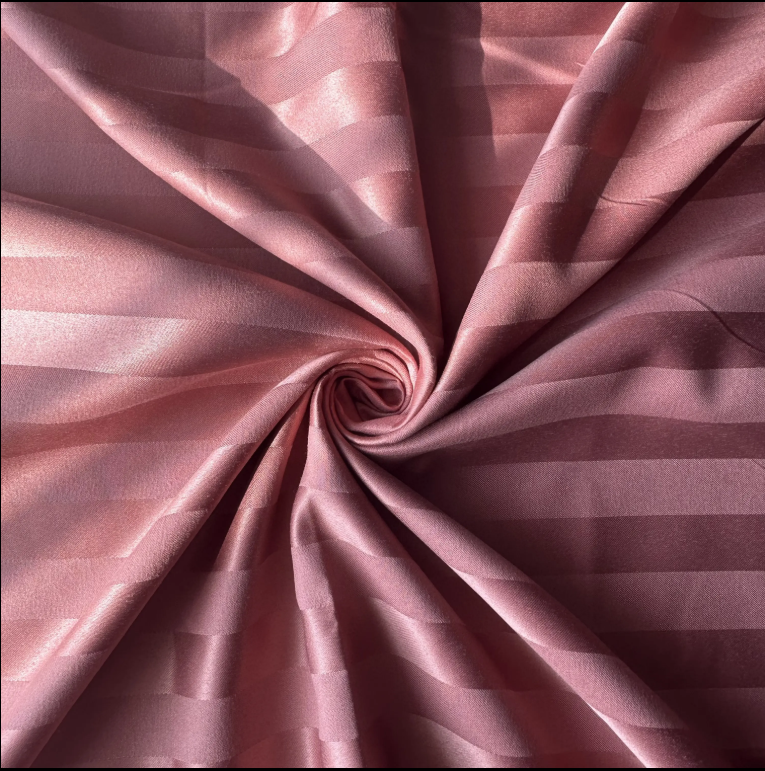
Jacquard fabric is a textile in which the pattern is woven directly into the structure of the cloth, rather than being applied afterward through printing, embroidery, or dyeing techniques. This means the design is created by the arrangement of the threads themselves during weaving, producing a pattern that appears on both the front and back of the fabric, often with the colors or textures reversed between the two sides. Because the design is built into the weave structure, jacquard patterns tend to be more durable over time than surface-applied designs, since there is no printed layer that can crack, fade unevenly, or peel away from repeated washing and wear.
The technique is named after Joseph Marie Jacquard, who developed a loom attachment in the early nineteenth century that used punched cards to control individual warp threads, allowing far more intricate patterns to be woven mechanically than had previously been possible by hand. Modern jacquard looms have replaced punched cards with computerized controls, but the underlying principle of individually controlling warp threads to create woven patterns remains the same.
How the Jacquard Weaving Process Works
Understanding the mechanics behind jacquard weaving helps explain why this fabric type is capable of such complex, detailed patterning compared to simpler weave structures like plain or twill weave.
Individual Warp Thread Control
Unlike standard looms that raise and lower groups of warp threads together in a repeating pattern, a jacquard loom can control each individual warp thread independently. This allows the loom to create highly detailed, non-repeating, or large-scale patterns that would be impossible to achieve with simpler mechanical weaving methods.
Pattern Programming
In modern production, patterns are programmed into computer software that translates the design into instructions for the loom's mechanism, determining exactly which warp threads should be raised or lowered at each pass of the weft thread to build up the intended image or motif row by row.
Common Fiber Types Used in Jacquard Fabric
Jacquard weaving can be applied to a wide range of fiber types, and the choice of fiber significantly influences the fabric's texture, drape, and best use cases.
| Fiber Type | Characteristic | Common Use |
| Silk Jacquard | Lightweight, lustrous sheen | Formal wear, neckties, scarves |
| Cotton Jacquard | Breathable, matte finish | Shirts, bedding, table linens |
| Wool Jacquard | Warm, textured hand feel | Coats, blankets, upholstery |
| Polyester Blend Jacquard | Durable, wrinkle-resistant | Curtains, upholstery, activewear |
Selecting the appropriate fiber base for a jacquard fabric depends heavily on the intended end use, since a silk jacquard suited for an evening gown would perform very differently from a heavier wool jacquard intended for upholstery fabric subject to daily wear.
Popular Applications in Fashion and Home Textiles
Jacquard fabric appears across a wide range of product categories, valued for both its visual complexity and the durability that comes from having the pattern woven directly into the cloth structure.
- Formal and evening wear, where the fabric's dimensional texture and sheen add a luxurious visual effect
- Neckties and pocket squares, which showcase intricate small-scale patterns well suited to jacquard's precision
- Upholstery fabric for furniture, where the woven pattern resists wear better than a printed surface design
- Drapery and curtain fabric, where jacquard patterns add visual interest without relying on printed dye that can fade in sunlight
- Bedding and table linens, where cotton jacquard offers a textured, elegant appearance suitable for both everyday and special-occasion use
The versatility of jacquard weaving across fiber types and weight categories allows designers to apply the technique to nearly any product category where a durable, built-in pattern is preferable to a surface-applied design.
Distinguishing Jacquard From Similar Fabric Types
Because several textile terms are sometimes used loosely or interchangeably, it helps to clarify how jacquard differs from other commonly confused fabric categories.
Jacquard Versus Brocade
Brocade is technically a specific type of jacquard weave characterized by raised, embossed-looking patterns, often incorporating metallic threads, that create a more pronounced three-dimensional surface texture compared to standard jacquard fabric.
Jacquard Versus Damask
Damask is another subtype of jacquard weaving, but it is typically woven using a single color of thread with the pattern created entirely through contrasting satin and matte weave textures, resulting in a more subtle, tone-on-tone visual effect compared to the multi-colored patterns often seen in general jacquard fabric.
Jacquard Versus Printed Fabric
Printed fabric applies a design to the surface of an already-woven base cloth using dye or pigment, meaning the pattern only appears on one side and can wear away or fade with repeated washing, unlike the woven-in structure of true jacquard fabric.
Proper Care and Maintenance for Jacquard Textiles
Because jacquard fabric can be produced from a wide variety of fiber types, care instructions vary significantly and should always be confirmed against the specific garment or textile's care label before cleaning.
- Silk jacquard typically requires dry cleaning or gentle hand washing to avoid damaging the delicate fibers and preserving its natural sheen
- Cotton jacquard can often be machine washed on a gentle cycle, though turning items inside out helps protect the woven pattern from abrasion
- Wool jacquard should generally be dry cleaned or hand washed in cold water to prevent shrinkage and felting of the wool fibers
- Ironing jacquard fabric on the reverse side, or using a pressing cloth, helps protect the raised texture of the woven pattern from flattening or scorching
Following fiber-appropriate care instructions helps preserve both the structural integrity and visual detail of jacquard fabric, allowing garments and home textiles made from this material to maintain their intricate woven patterns for many years of use.